Artificial intelligence (AI) is developing quickly, sparking conversations and arguments about how
it can disrupt many industries. Will AI replace cybersecurity employment, and are experts in this sector
ready for the seismic shift that may be on the horizon?
This question hangs large in
cybersecurity, where human skill and alertness have long been the
frontline protection against digital threats. Effective cybersecurity is more important than ever
because as
technology develops, so do hackers’ strategies.
The Impact of AI on Cyber Security Jobs
There is a lot of buzz around AI handling work that humans have been doing so far, and no industry has been left untouched, including cyber security. The concern is not completely to be ruled out,and people fear and often ask, will AI replace cyber security jobs?
With AI-powered solutions becoming more prevalent, there are things that AI has helped businesses streamline, including cyber security.
One thing that has been a topic of discussion ever since artificial intelligence came into existence – will cyber security be automated. The answer, however, is yes.
AI and the Role of Human Expertise in CyberSecurity
There is no denying that AI will require human interactions and continuous training to improve itsefficiency in cyber security. With human expertise and AI tools, businesses can mitigate false positives and successfully control cyber crimes
1. The Value of Intuitions and Ethical Decision-Making
One of the misconceptions is that AI thinks like a human; the reality is that it has its own set of limitations. AI can analyze tons of data but lacks human intuitions and decision-making skills.
Cyber security always needs a human touch, as cyber threats can be complex. Therefore, you will always need a cyber security professional who can think out of the box and come up with innovative solutions that can be used to enhance AI tools and systems further.
2. The Need for Complex Problem-Solving Abilities
Even though AI can automate tasks and help reduce the burden, companies will always need experienced cybersecurity professionals with complex problem-solving abilities. To answer, will AI replace cyber security – they will work together to develop defense strategies and anticipate future threats.
Collaboration Between AI and CyberSecurity Professionals
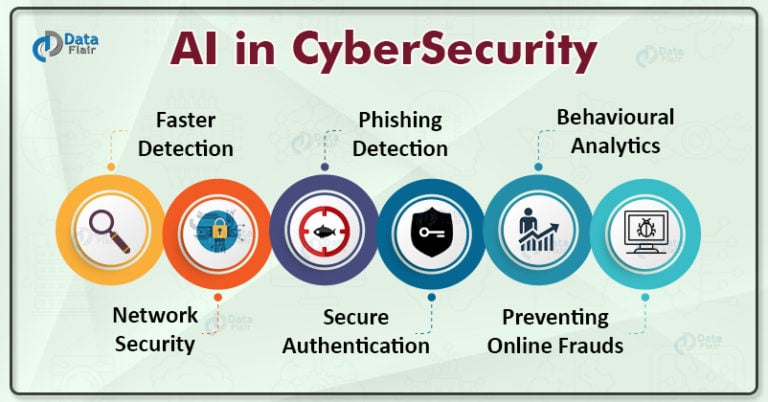
AI and cybersecurity professionals can work together to recognize complex data patterns, enable autonomous mitigation, and make actionable recommendations.
1.AI-Assisted Analysis of Data and Threat Identification
Artificial intelligence and human skills can help companies understand, learn, and act effectively based on readily available data sets. Specialists can use AI techniques to analyze patterns and craft predictions to avoid possible threats.
2.Human Oversight and Interpretation of AI-Generated Insights
Cybersecurity professionals have unique abilities to complement the power of AI. They can use their critical thinking, human intuition, and domain expertise to understand the intent of security threats.
3.AI Augmenting and Enhancing Human Capabilities
AI augmenting is a medium where humans and machines can work hand in hand. AI augmenting puts the person in control and emphasizes how they can use AI for support and enhance human capabilities, such as listening, seeing, and decision-making.
The Future of Cybersecurity Jobs in the Age of AI
Will AI replace cybersecurity jobs as it is improving and offering safety and security? Let’s understand it.
1.Evolution and Adaptation of Cybersecurity Roles
With the adoption of artificial intelligence in cybersecurity, there is a high likelihood of new jobs and better opportunities. If AI is used to automate tasks, companies will need skilled individuals to manage and perform those systems.
2.Emphasis on Specialized Skills and Expertise
With the cybercrime rate increasing, the need for cyber professionals is also rising. As per a report, since 2016, there has been a 0% unemployment rate for cybersecurity professionals.
Based on findings by Cybersecurity Ventures, more than 3.5 million cybersecurity jobs areavailable globally.
Ensuring the Human Element in Cybersecurity
While implementing an AI-based cybersecurity strategy is essential to combat modern threats, itcan never replace human intelligence. Hackers are humans, and cybersecurity experts must think like hackers to prevent attacks.
Investing in technology alone will not be sufficient to combat cyber attacks in the future. Organizations must also invest in their security workforce and train their employees to leverage AI technology for managing detection and response systems.
AI technology provides 360-degree visibility to the enterprise security landscape, but human intelligence is necessary for real-time cybersecurity defense. While defining organizational security posture, leaders must define security protocols, keeping the end-users in mind.
So, the question remains – will AI replace cybersecurity? AI-based cybersecurity systems alone can’t ensure fairness and social justice. Bias may be introduced due to poor training data, algorithm design, or result interpretation, which can result in discriminatory outcomes.
Cybersecurity experts need to have ethical considerations to ensure transparency and fairness. So, continuous human insight and interference are necessary for AI cybersecurity programs to be successful.
Overcoming Challenges and Maximizing AI’s Potential
AI is a growing field currently and is transforming itself every day. Therefore, facing challenges while using or adopting its systems is possible. Let’s look at ways by which you can overcome those challenges and maximize its potential:
1.Addressing Concerns About Job Displacements
Will AI replace cybersecurity jobs? A common question and the biggest challenge is stopping companies from maximizing AI’s potential. Job displacements create anxiety among employees and stakeholders, which is imperative to take care of.
2.Leveraging AI to Enhance Efficiency and Effectiveness
You can use AI systems and tools to integrate threat intelligence, automate incident response behavioral analytics, and detect malware that will help enhance your processes’ efficiency and effectiveness.